Ethiopia is surrounded by problem-countries.
In the north, there is the on-again, off-again war with Eritrea. To the east, there is the African basket-case of Somalia. On its long western border, there is the ongoing conflict in the Sudan. Only on its southern border does Ethiopia have a relatively stable neighbor in Kenya. But it was along that border that we ran into trouble.
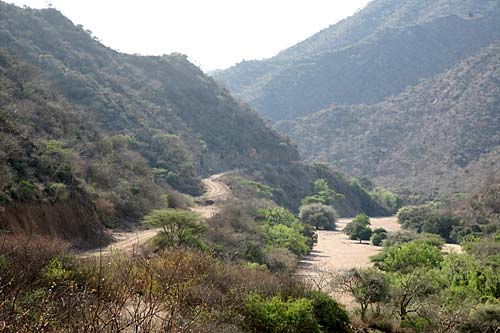
From the southwestern village of Turmi, center of trading for the warm and friendly Hamer tribe, we traveled east, descending even further in elevation in the direction of Lake Stephanie. To access the small Erbore tribe village we first had to pass through a military checkpoint. This made sense only later.
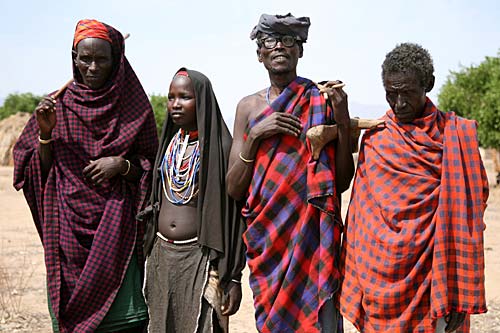
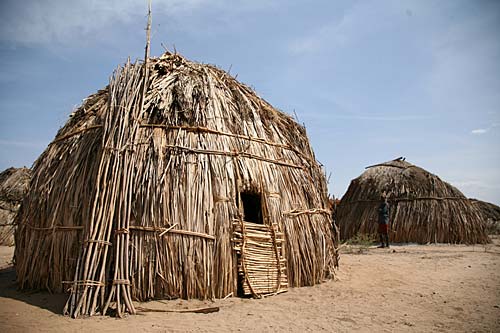
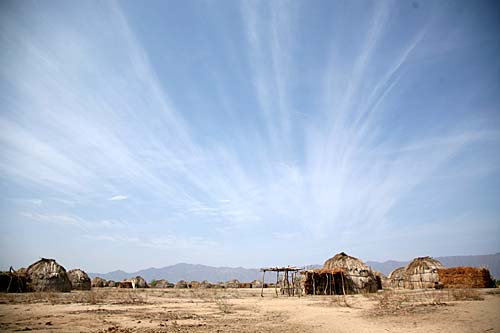
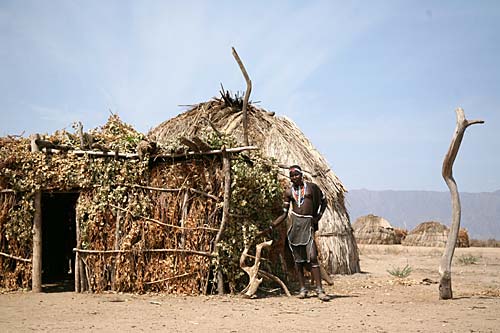
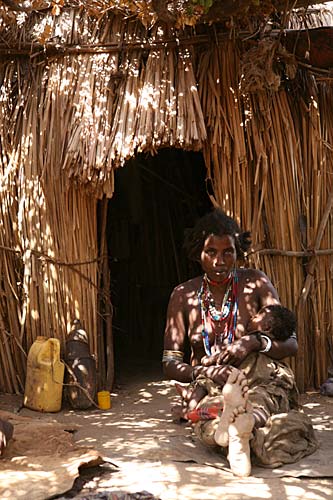
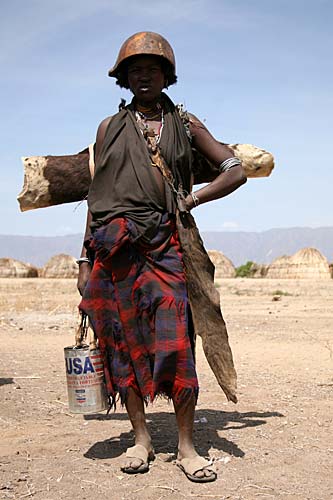
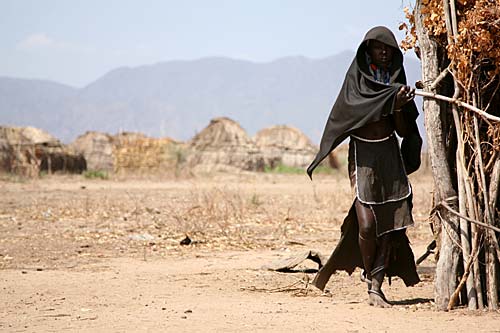
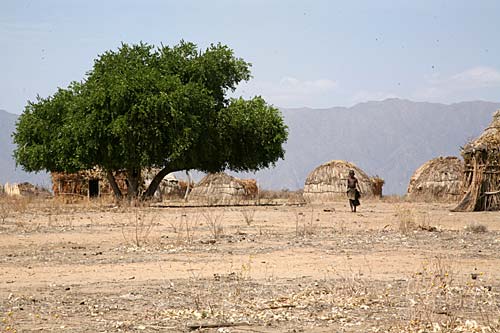
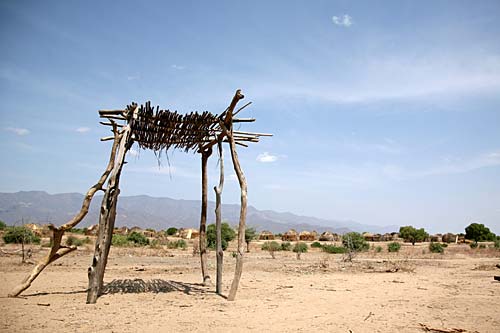
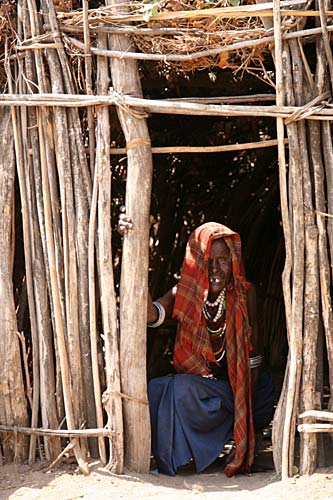
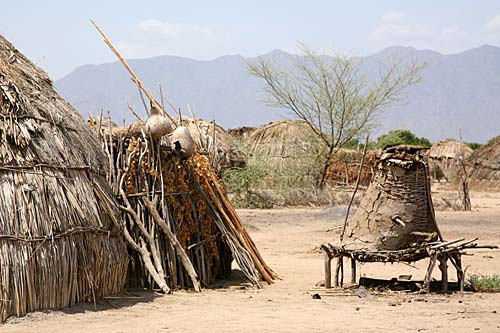
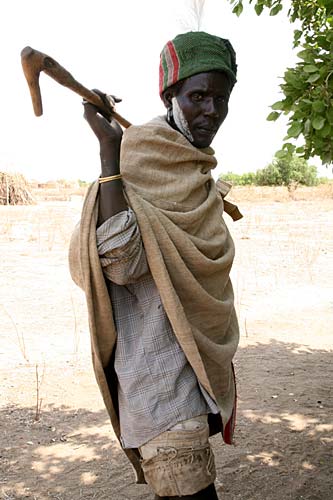
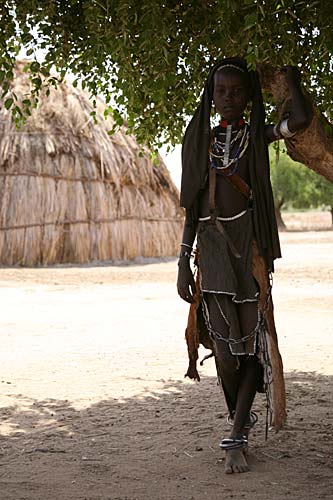
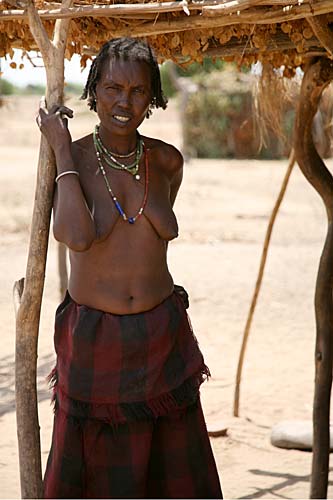
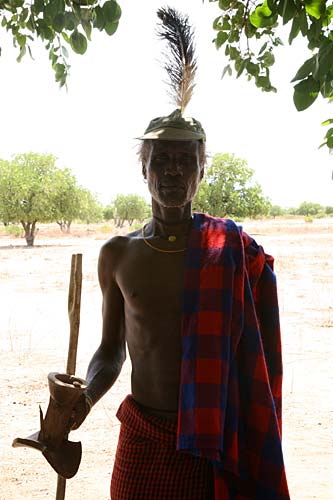
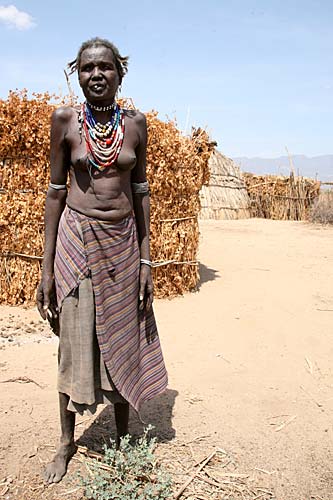
The Erbore village itself was cooked into the earth. I'm not sure how people manage to live there year-round: even sitting in the shade under one of the lone trees was unbearably hot. Actually, under this one tree we parked our car and still made room for some twenty tribal men, most of them armed to the teeth with rifles or machine guns.
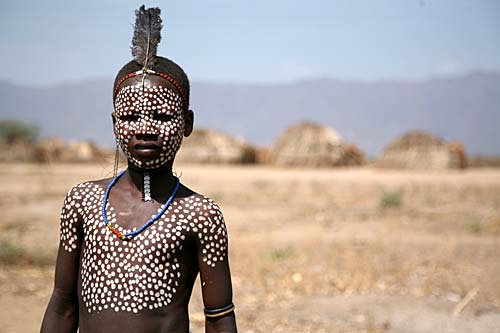
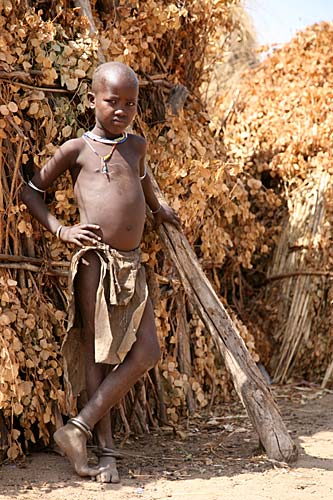
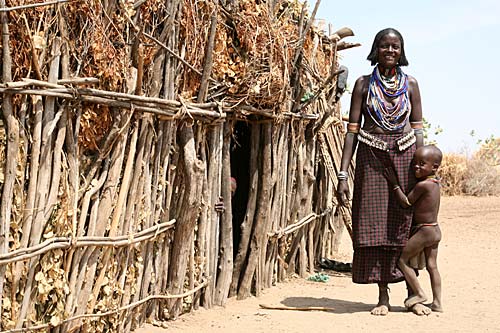
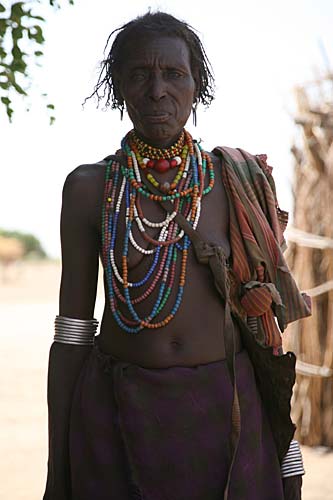
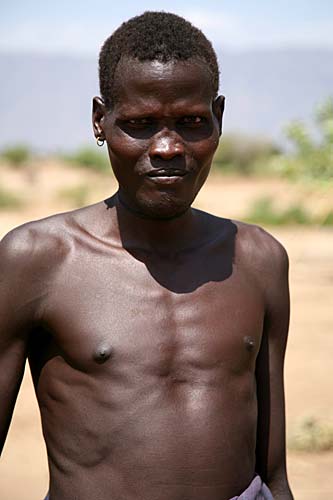
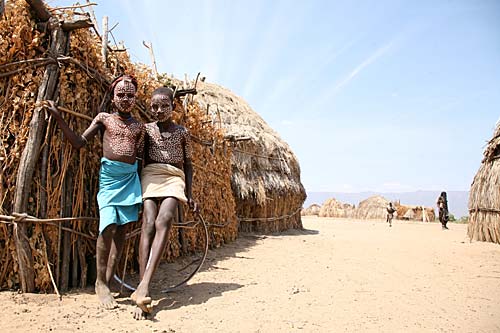
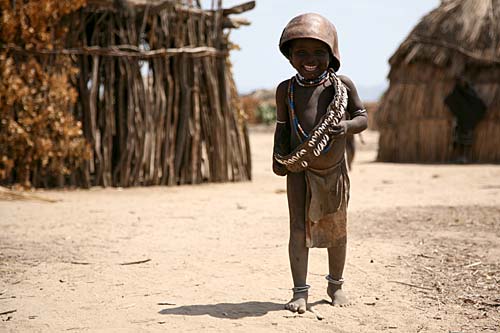
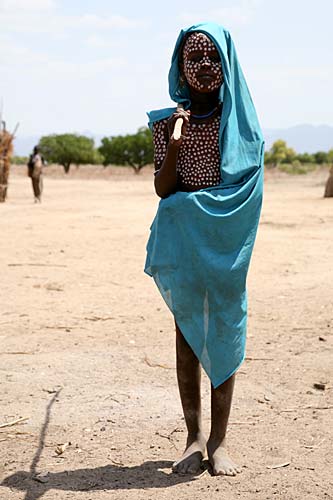
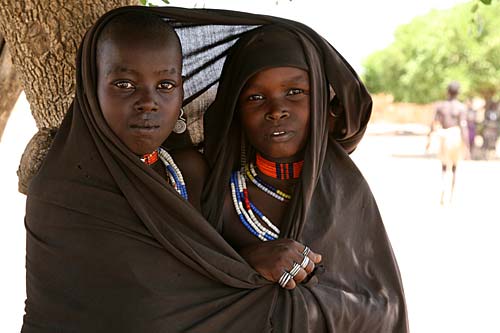
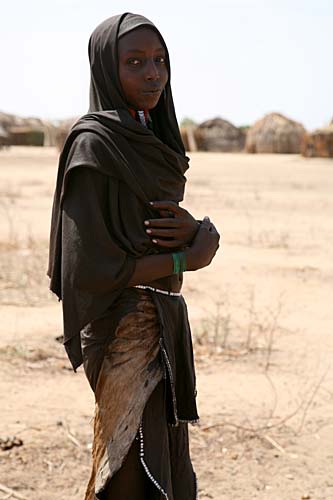
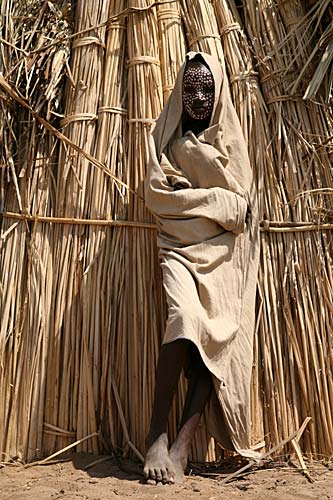
While the village may look primitive--its quaint round straw huts a throwback to life some 5,000 years ago--there's no denying the harsh reality of life in these remote areas. Not only do the tribes have to battle the elements, not the least of which are oppressive heat, little water and malaria, but they often battle each other. Many of the men openly flaunt their kills, either with body scarring on their chest denoting the number of enemy killed or with bracelets denoting the same. Each tribe has its own particular method, but if you run across a man with a chestful of geometrical self-imposed scarring, then beware. Even if he is wearing a skirt and fancy hoop earrings.
We didn't have any problems at the village. Well, except for Leila. If there's one major downside to travel in southern Ethiopia, it's the constant demands for money in exchange for photographs. Not always, and not everywhere, but in this particular village the rule was not to be broken. It can be a little trying on your patience, especially if they are pushy and demanding. And when one of the tribesmen insisted that Leila pay him because she had taken a picture of some huts, Leila snapped and boycotted the Erbore tribe. Aside from that, no troubles at all.
When we went to leave, the military stopped us at the checkpoint, and a long conversation ensued. Something had happened. Another car on the road we had just taken was robbed at gunpoint. Not everything, mind you: just cash. But enough to get everyone quite agitated.
The Erbore guide that was to accompany us for the next section of our trip squeezed into the back seat, rifle ready. A machine-gun wielding soldier climbed into the back. And several more armed soldiers climbed onto the roof of another 4WD that had just arrived at the checkpoint. Our little expedition had suddenly turned into an armed brigade.
As we stormed towards the problem area at full speed, I wondered what they had in mind. A pitched gun battle from our cars against the bandits? A Wild West style showdown in the desert? I'm all for law and order, but I couldn't quite reconcile how three foreign tourists fit in to this scenario. At least not in any positive way.
Before we reached the area where the robbery had taken place, all the armed soldiers from the other car jumped off and came to our roof instead. And we somehow found room to fit another one in the back. Plus their weapons. Then the other car drove off towards Turmi. Apparently they were in no mood to participate.
This made us the lone desert enforcer. And so we turned off the main road into the desert brush, in search of trouble. Or at least, that's what it looked like to me. I half expected a roving band or armed bandits to jump out of their hiding places at any moment, screaming and guns blazing, ready to battle it out to the death. But that didn't happen. Which is a good thing. Instead, we dropped off the military personnel near the local village chief's house, where they could discuss the situation calmly and find a reasonable solution (as it turns out, they caught and arrested the bandits not too much later, with the help of the locals).
From there we drove out to Lake Stephanie. I actually expected a lake. With water. On the map it's even shown in light blue.
I was wrong.
Lake Stephanie during the dry season is about as moist and watery as the Sahara: a brown expanse of cracked, parched earth stretching out for miles and miles in every direction. A gigantic bowl of perfectly flat dirt and dust. The locals call it Chelbi, which means empty.
When she first saw it Leila commented to Pascal that it was one of the most beautiful lakes she'd ever seen. We got a good laugh out of that, and Leila learned all about the empty promises of mirages: the beautiful illusion of water in the distance caused by excessive heat on a flat surface.
We drove out into this forbidding emptiness, our car at full speed seeming not to advance at all, with no perceptible change in landscape by which to measure our speed, save for the hot wind through our windows and the long plume of dust in our wake. We drove and drove towards the mountainous hills hazy in the distance on the other side.
What we expected to find on the other side were wild animals at a couple rare watering holes in this extra-dry landscape. Instead, we found Kenyans. Apparently, the drought is so severe this year in the northern part of their country that they were forced to cross the border with their cattle to save them from starvation and dehydration.
There were some twenty to thirty Kenyans, each fully armed with automatic rifles and outfitted from your local mismatched Army surplus store, looking over a dying herd of cows, goats, sheep, pack mules and sheep dogs.
As soon as we approached, I knew it was trouble. There were dozens of rotting carcasses of dead cattle strewn around their camp, in various stages of rot and decomposition. The stench of death and decay was nauseating. And this band of Kenyans was far from friendly.
It turns out that two of their group had recently been gunned down out on the lake. They were angry, wanting answers. And retribution. Clashes between the Kenyans and Ethiopian tribes across the lake have been going on for centuries, just like the fighting between various Ethiopian tribes, but we'd just stumbled into a fresh outbreak during a tense situation. Three Ethiopians and three tourists riding directly into a camp of Kenyans out for Ethiopian blood.
This is where the Erboran guide we'd picked up at the military checkpoint came in handy. His one rifle against their dozens of ready machine guns was a joke, but he could speak their language. He was also a seasoned veteran of six tribal wars, and a hero in his own tribe. After a good 20 minutes of intense discussion they let us drive away. I remained in the car the whole time, wondering what on earth I was doing surrounded by decomposing corpses and angry Kenyans in the middle of a lake that wasn't.
But on the drive back across the lake, we chased three wild ostriches across the lake bed, and I knew why. There are some things so rare and beautiful you can only see them at the edge of the world.